Best Time to Visit Munnar: A Complete Season Guide
 Services
Munnar is one of India's most breathtaking hill stations, and knowing the best time to visit Munnar can make all the difference between a good trip and an unforgettable one. Nestled in the Western Ghats of Kerala, Munnar transforms with every season, offering a completely different experience from October to September. Whether you are planning a romantic getaway, a family holiday, or a solo escape into nature, the right season sets the stage for everything. This guide walks you through every season so you can plan your Munnar trip with confidence. Explore the best places to stay in Munnar to match your ideal season.
Key Takeaways
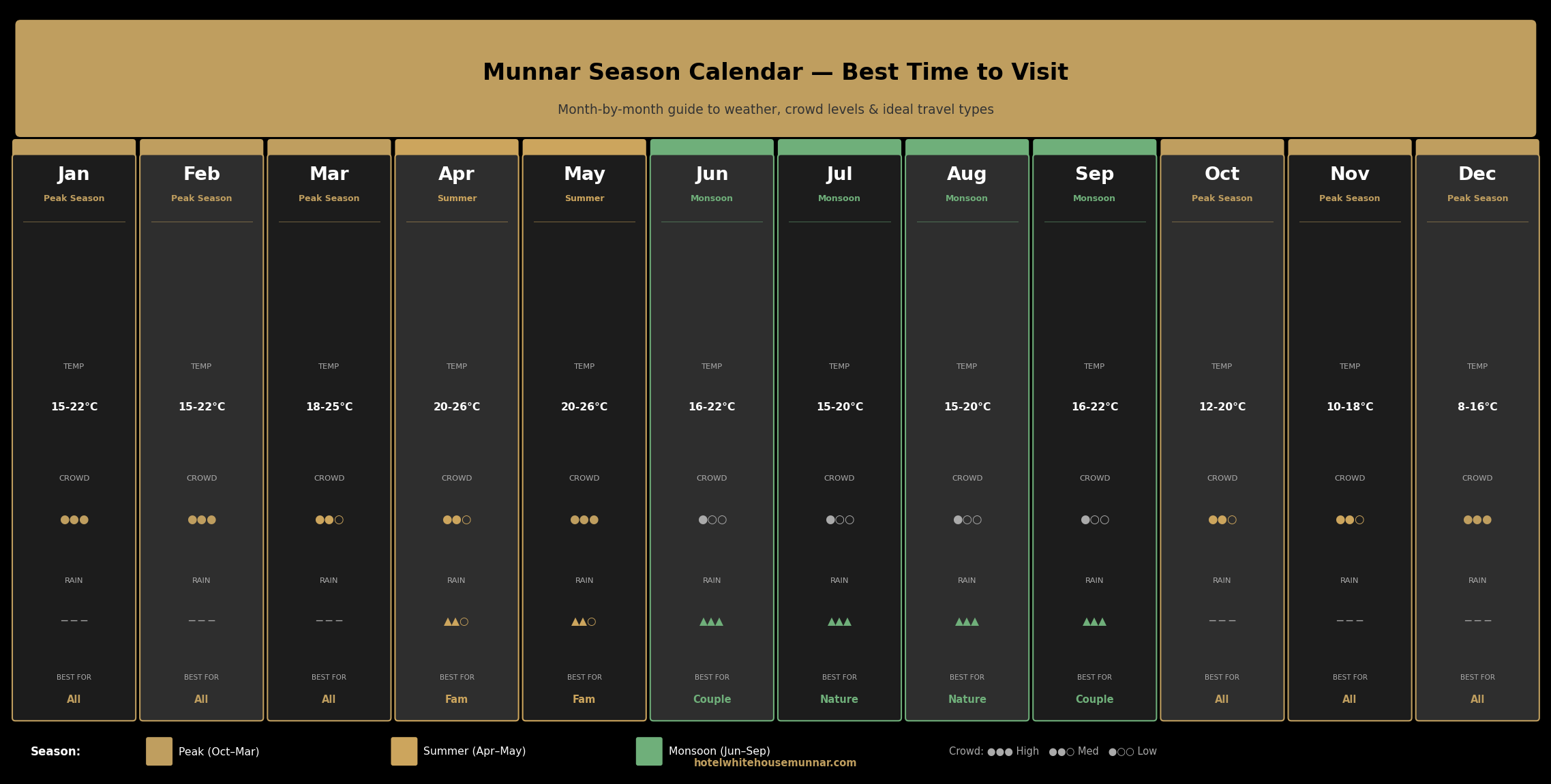
October to March is the peak season with clear skies, cool weather, and the best conditions for sightseeing and outdoor activities.
June to September brings monsoon magic, lush greenery, and misty valleys perfect for couples seeking privacy and romance.
April and May offer a warm but manageable summer, popular with families during school holidays, with fewer crowds than peak season.
Munnar Through the Seasons: What to Expect
Munnar experiences four distinct seasons, each offering a unique atmosphere, landscape, and travel experience.
Munnar sits at an altitude of approximately 1,600 metres above sea level in the Idukki district of Kerala. This elevation means the climate stays relatively cool throughout the year compared to the plains. However, each season brings a dramatically different version of Munnar. Temperatures range from as low as 5 degrees Celsius during winter nights to around 25 degrees Celsius in peak summer. The monsoon months bring heavy rainfall, transforming the hills into a vivid green canvas that photographers and nature lovers dream about. Understanding these seasonal patterns helps you choose the perfect window for your travel style, budget, and expectations from a Munnar trip.
Peak Season in Munnar (October to March)
The peak season offers the clearest skies, pleasant temperatures, and the widest range of outdoor activities across Munnar.
From October to March, Munnar is at its most welcoming. The post-monsoon freshness lingers through October and November, painting the hills in vivid green while keeping the skies crystal clear. December and January are the coolest months, with temperatures dipping to around 5 degrees Celsius at night, creating a magical mist-covered landscape. February and March bring warmer days while keeping nights cool and comfortable. This period sees the highest tourist footfall, particularly during the December holiday season and New Year celebrations. Booking your stay at resorts in Munnar well in advance is strongly recommended during these months. The Eravikulam National Park, home to the endangered Nilgiri Tahr, is open and accessible, and most viewpoints and waterfalls near the property offer clear, unobstructed views. Hotel White House Munnar's Forest View and Valley View rooms are especially breathtaking during this period.
Best For | All traveler types, especially first-time visitors |
Avg Temperature | 5 degrees C to 22 degrees C |
Crowd Level | High (Dec-Jan) | Medium (Oct-Nov, Feb-Mar) |
Pro Tip | Book your stay 6 to 8 weeks in advance during December |
Munnar in Monsoon (June to September)
Monsoon season transforms Munnar into a lush, romantic paradise with cascading waterfalls and dramatic misty valleys.
The monsoon months from June to September are underrated by many travelers but deeply loved by those who have experienced them. Rainfall in Munnar during this period averages between 200mm and 400mm per month, according to data from the India Meteorological Department. The tea gardens turn a vivid emerald, waterfalls like Attukad and Ripple are at their most spectacular, and the fog rolls in to create an intimate, ethereal atmosphere across the hills. Crowds thin out significantly, making it a quieter and more private experience compared to peak season.
For couples seeking a secluded romantic escape, the honeymoon resorts in Munnar are at their most enchanting during this season. Sitting on your private balcony at Hotel White House Munnar with a cup of freshly brewed Kerala tea while watching the mist roll over the forest is an experience that stays with you long after you return home. The bonfire area at the property is particularly special on cool monsoon evenings.
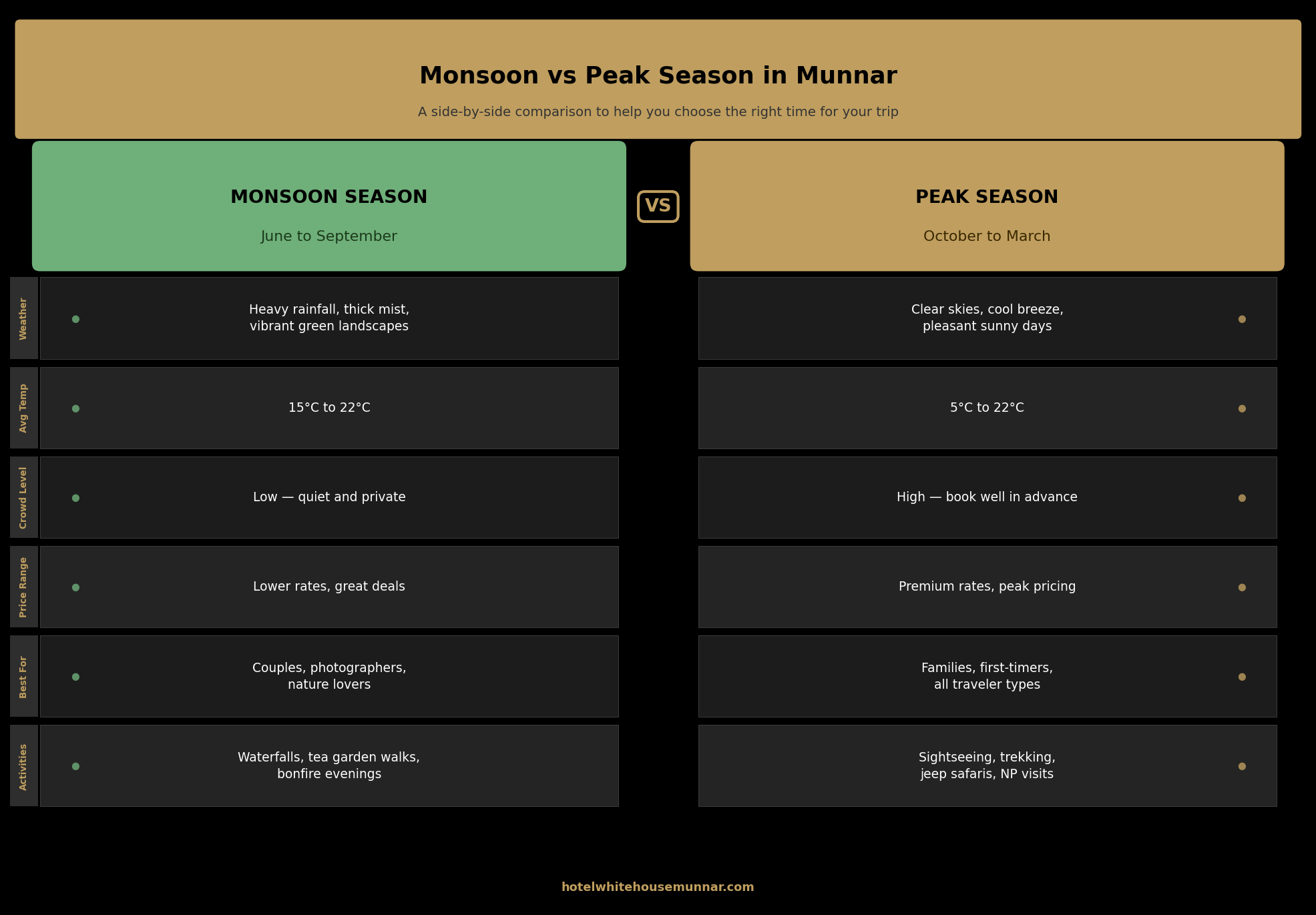
Best For | Couples, nature lovers, photographers |
Avg Temperature | 15 degrees C to 22 degrees C |
Pro Tip | Pack waterproof gear and request a balcony room for the best monsoon views |
Summer in Munnar (April to May)
Summer is warmer but still far cooler than the Indian plains, making Munnar a popular escape for families during school holidays.
April and May mark the summer season in Munnar. Temperatures climb to around 25 degrees Celsius during the day but remain comfortable compared to cities like Bangalore, Chennai, or Mumbai. This period coincides with school vacations across India, making it one of the busiest times for family resorts in Munnar. The landscape is drier than the monsoon months, making trekking, jeep safaris, and visits to viewpoints straightforward and enjoyable. The places nearby including Eravikulam National Park, Pothamedu Viewpoint, and Ripple Waterfalls, are easily accessible during this period. Hotel White House Munnar's kids play area, separate children's pool, and recreation facilities make it particularly well-suited for families travelling during summer. Expect moderate to high crowds, especially through April and early May.
Best For | Families with children, trekking enthusiasts |
Avg Temperature | 18 degrees C to 25 degrees C |
Crowd Level | Medium to High, especially April-May school holidays |
How to Choose the Right Time Based on Your Travel Type
Your ideal Munnar travel window depends entirely on what kind of experience you are looking for.
Not every season suits every traveler. Honeymooners and couples often prefer the monsoon season for its privacy, romance, and dramatic landscapes, or the cool December and January window for festive celebrations and clear starry nights. Families tend to gravitate toward the summer holidays in April and May or the school break in December. Budget-conscious travelers consistently find the best rates during the monsoon shoulder season. Solo travelers and nature photographers often choose July and August for the most dramatic and moody Munnar landscapes. Understanding this alignment between your travel style and the season helps you plan a Munnar trip that truly delivers on every expectation.

Conclusion
Munnar is a destination that rewards you no matter when you visit, but choosing the right season for your travel style makes every moment count. The best time to visit Munnar depends on whether you are chasing clear skies and peak-season sightseeing, the lush romance of monsoon mist, or the family-friendly warmth of a summer holiday. Whatever the season, Hotel White House Munnar is ready to welcome you with personalised stays, scenic Forest View and Valley View rooms, and warm Kerala hospitality. Book your stay today and experience the misty hills of Munnar the way they deserve to be experienced. Reach out to our team and let us help you find the ideal room for your season.
Frequently Asked Questions
Which month is best to visit Munnar?

October to March is the best time to visit Munnar, offering clear skies and pleasant temperatures. December and January are the most popular months, ideal for sightseeing, outdoor activities, and enjoying the cool hill climate at its finest.resorts in Munnar
Is Munnar good to visit in December?
Yes, December is one of the best months to visit Munnar. The weather is cool, skies are clear, and the holiday season adds a festive atmosphere. Book your stay early as it is the peak season and resorts fill up quickly.
Is Munnar worth visiting during the monsoon?
Absolutely. The monsoon transforms Munnar into a lush green paradise. Waterfalls are at their peak, tea gardens are vivid, and the mist creates a romantic atmosphere. It is ideal for couples and nature lovers who prefer fewer crowds and lower prices.
What is the weather like in Munnar in January?
January is one of Munnar's coldest months, with temperatures ranging from 5 degrees to 15 degrees Celsius. Expect misty mornings, clear afternoons, and chilly evenings. It is a great time for sightseeing and outdoor activities in Munnar.resorts in Munnar
Is Munnar crowded in October?
October marks the start of the peak season but is less crowded than December and January. The post-monsoon greenery makes October one of the most visually stunning months. Expect moderate crowds and good availability at most resorts in Munnar.
What should I pack for a Munnar trip?
Pack warm layers for evenings and mornings, comfortable walking shoes for trekking, and a light rain jacket regardless of the season. During monsoon, include waterproof gear. Sunscreen is essential year-round due to high-altitude UV exposure in Munnar.
How many days are enough for a Munnar trip?
A minimum of two to three days is recommended to explore Munnar's key attractions. Three to four days allows you to visit viewpoints, waterfalls, the Tea Museum, and Eravikulam National Park comfortably without feeling rushed.
Is Munnar safe to visit during the monsoon?
Munnar is generally safe during monsoon. However, heavy rains can occasionally cause road disruptions on the ghats. Check road conditions before travel, and choose a resort close to main attractions. Book your stay
What is the coldest month in Munnar?
January is typically the coldest month in Munnar, with temperatures dropping as low as 4 to 5 degrees Celsius at night. If you enjoy cool, misty weather, January offers the most wintery Munnar experience and is a favourite among visitors from warmer cities.
Can I visit Eravikulam National Park in all seasons?
Eravikulam National Park is generally closed during the Nilgiri Tahr calving season, usually from February to March. It is open and accessible during the rest of the year. Check official schedules before planning your visit. Explore places nearby Munnar for more attractions close to the hotel.