Munnar Tea Garden Tours: What to Expect and How to Book
 General
Tea is what put Munnar on the map, and a tea garden tour is one of the few experiences here that genuinely explains why the hills look the way they do. Whether you have an hour or an afternoon, guests at Hotel White House Munnar have a few different ways to see the estates up close.
Key Takeaways
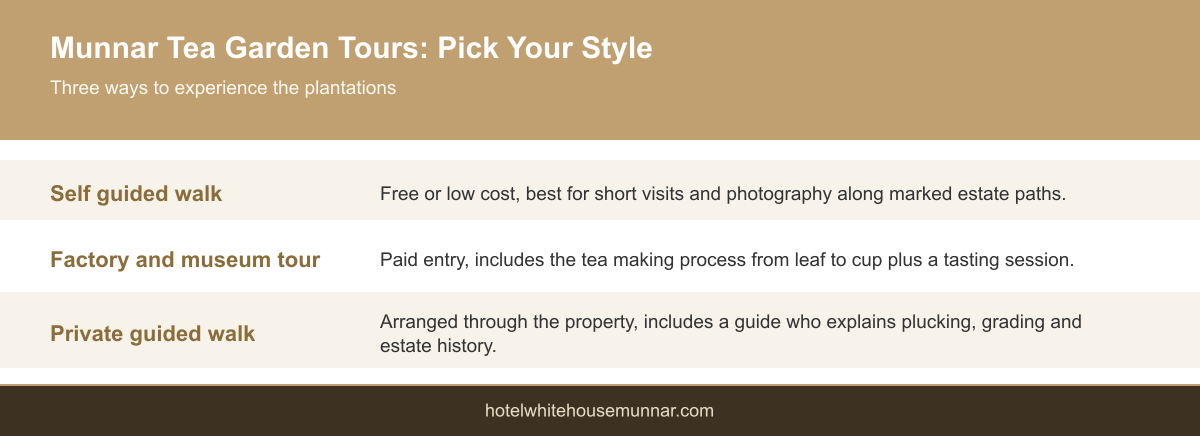
You can see Munnar tea gardens on a free self guided walk, a paid factory tour, or a private guided estate walk.
Most estates and factories sit within 20 to 40 minutes of the property.
A factory tour is the best option if you want to understand how leaf becomes finished tea, from plucking to grading.
Why Munnar Became Tea Country
The rolling green hills around Munnar were planted with tea starting in the late 1800s, when British planters found the altitude and rainfall here well suited to the crop. Over time, estates spread across the hillsides, and much of that land is now managed by Kannan Devan plantations, one of the largest tea operations in the region.
That history is part of what makes a tea garden visit interesting beyond the scenery. The terraced rows you see from the road are the result of more than a century of continuous cultivation on the same slopes, still worked largely by hand for the most delicate plucking.
The altitude here, generally between 1,600 and 2,000 metres, slows the growth of the tea plant just enough to concentrate flavour in the leaf, which is part of why Munnar tea has its own reputation distinct from teas grown at lower elevations elsewhere in India. Cooler nights and consistent cloud cover through much of the year add to that effect, giving the region a growing climate that is genuinely difficult to replicate.
Most estates around Munnar grow their own clonal varieties, developed over decades to suit this specific soil and climate, rather than a single generic tea plant. Walking between two neighbouring estates, you can sometimes tell the difference in leaf colour and bush shape just by looking closely, a small detail that a guide will happily point out if you ask.
Self Guided Walks Through the Estates
The simplest way to experience a munnar tea estate walk is to pick an estate with public paths and walk in on your own. Several estates near the property allow visitors to walk along marked tracks between the tea rows, which is ideal if you mainly want photographs and a sense of scale.
This option costs little or nothing and works well for a short stop between other plans. It does mean you will not get the explanation a guide provides, so pair it with a factory visit if you want the fuller picture.
Early morning is the best time for a self guided walk, both for the light and because pluckers are often out working the rows at that hour, which adds life to the photographs beyond an empty landscape. Stick to the marked paths rather than wandering off into working sections of the estate, since these are private agricultural land, not open parkland. A wide brimmed hat and comfortable shoes are worth packing, since shade is limited once you are out among the bushes and paths can be damp underfoot for much of the year.
Factory Tours and the Tea Museum
A tea factory visit takes you through the actual production process: withering, rolling, oxidation, drying and grading, usually ending with a tasting session. The Tea Museum near Munnar covers this history in more depth, with old machinery and photographs from the early plantation years, alongside a working demonstration line.
These tours typically run on a fixed schedule with a small entry fee, and tend to be busiest in the late morning. If you want a quieter visit, aim for the first slot of the day, which our front desk can help you check before you set out.
Photography is usually allowed on the factory floor, though flash is often restricted around some of the older machinery, so check with staff before you start shooting. The tasting session at the end typically covers two or three grades side by side, a useful way to notice differences in colour and strength that are hard to appreciate from a single cup at breakfast.
Private Guided Walks Through the Property
For a more personal experience, a private guide can walk you through an estate and explain plucking standards, grading, and how weather through the season affects the final cup. This is the best option if you are genuinely curious about the craft rather than just the view.
Ask our team when you check in and we can arrange this alongside other stops from our guide to places to visit near Hotel White House Munnar, so you are not spending the whole day arranging logistics on your own.
A private guide tends to be a local resident who has worked the estates directly or grown up around them, which means questions about weather, wages, or how a particular season affected the harvest usually get honest, specific answers rather than a rehearsed script. For guests who want more than a photo stop, this is generally the most rewarding of the three options, even though it costs more than a self guided walk.
Conclusion
Between a quick self guided walk, a structured factory tour, and a private guide who knows the estates personally, there is a version of this experience that fits almost any pace of travel. It is one of the few things near Munnar that rewards both a rushed twenty minute stop and an unhurried afternoon equally well. However you choose to see it, a tea garden tour near Hotel White House Munnar is one of the easiest ways to understand what makes this part of Kerala unique. Pick a self guided walk for a quick stop, or a factory tour if you want the full story behind the cup. Explore our rooms and plan a stay with time built in for at least one estate visit.
Frequently Asked Questions
How far are the tea gardens from Hotel White House Munnar?

Is there an entry fee for Munnar tea garden tours?
What happens on a tea factory visit?
What is Kannan Devan tea plantation?
Can I walk through the tea gardens on my own?
When is the best time to visit a tea factory in Munnar?
Can Hotel White House Munnar arrange a private tea garden guide?
What should I wear for a tea garden visit?