Spice Plantation Tours Near Munnar: Cardamom, Pepper and More
 General
Kerala has been part of the global spice trade for centuries, and the hills around Munnar still grow much of what made this coast famous. A spice plantation tour is an easy add on for guests at Hotel White House Munnar who want to see cardamom, pepper and more growing in the ground rather than on a shelf.
Key Takeaways
Spice plantations near Munnar typically grow cardamom, pepper, cinnamon, clove, nutmeg and vanilla within one guided walk.
Most plantations are about 30 to 45 minutes from the property.
Guided walks usually end with a small tasting or a chance to buy fresh spices directly from the estate.
Why This Region Grows So Many Spices
The hills around Munnar sit within the Western Ghats, one of the traditional homelands of Indian spice cultivation, and the shaded, humid slopes here suit crops like cardamom particularly well. This part of Kerala has exported spices for hundreds of years, long before tea plantations arrived, and small growers still work alongside the larger tea estates today.
A well run spice garden brings several of these crops together in one place, planted under a canopy of taller trees, which mimics how spices grow in the wild and makes for an easy, shaded walk even at midday.
Many of these gardens are still run by families who have farmed the same plots for generations, often alongside a small holding of coffee or tea. That mixed farming pattern is common across the Western Ghats, where a single family plot might carry three or four different crops at once, planted in layers to make the most of limited hillside land.
What You Will See on a Guided Walk
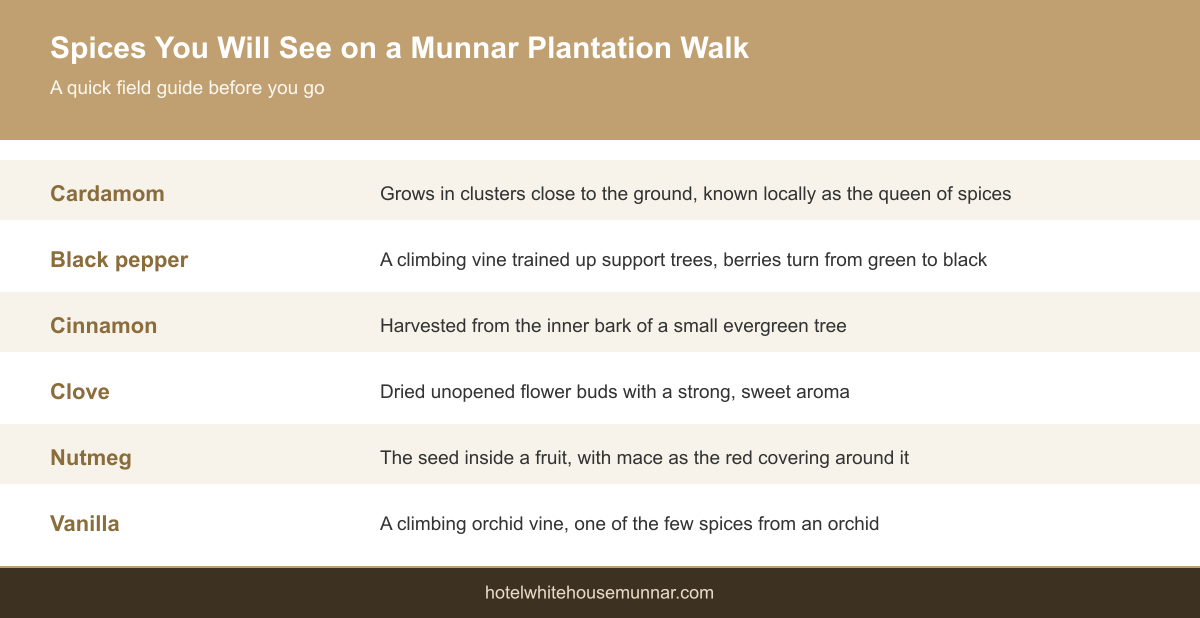
Cardamom grows close to the ground in dense clumps, often called the queen of spices for its value and aroma. Black pepper, by contrast, is a climbing vine trained up support trees, with clusters of berries that ripen from green to black. Kerala has grown and traded both for long enough that either could reasonably claim to have shaped the region's early economy more than any other single crop.
Depending on the estate, you may also see cinnamon trees, clove buds, nutmeg fruit with its distinctive red mace, and vanilla, one of the few spices that comes from an orchid vine. A good guide will point out each plant along the path and explain how it is harvested and processed.
Look closely and you will also usually spot coffee bushes, banana plants used for shade, and occasionally a curry leaf or turmeric patch tucked between the larger crops. Most guides are happy to let you smell and gently touch leaves along the way, which is often more memorable than the visual alone, since several of these plants have a much stronger scent when the leaf is crushed.
Planning Your Visit from Hotel White House Munnar
Most spice plantations near the property are about 30 to 45 minutes away, and many can be combined with a stop at a nearby waterfall or tea estate for a fuller half day. Ask our front desk about current options, since some estates require advance notice for a guided walk rather than accepting walk in visitors.
If you are curious about India's spice trade more broadly, the Spices Board of India publishes background on the crops grown across the country, which is useful reading before or after your visit.
If you are staying only briefly and want to keep the day simple, a single estate visit is easy to fit around lunch, since most guided walks run under an hour. Guests planning a longer stay sometimes visit two different estates on separate days, since growing conditions and the specific mix of spices can vary noticeably even between neighbouring farms.
Buying Spices and Wrapping Up the Visit
Most guided tours end at a small shop attached to the estate, where you can buy cardamom, pepper and other spices directly, often at better prices and freshness than you would find in a general store. This is also usually where you get a short tasting, sometimes paired with fresh ginger or cardamom tea.
Bring cash for small purchases, since card facilities are not always available at smaller family run estates. If you want to see more of the region on the same trip, our guide to places to visit near Hotel White House Munnar covers other nearby stops worth combining with a spice garden visit.
Vacuum sealed packets of cardamom and pepper travel well and make some of the more genuinely useful souvenirs from a Munnar trip, since they are light, do not spoil quickly, and are hard to find at this quality outside the growing region itself. If you are buying in bulk to take home or gift, ask the estate shop about their packing and shelf life so it stays fresh for the journey back.
Conclusion
A spice garden asks less of a visitor than almost any other stop on a Munnar itinerary, no early start, no long walk, and no ticket queue, yet it leaves most guests with a clearer picture of the region's history than a day of sightseeing alone would. A spice plantation tour near Hotel White House Munnar is a quiet, shaded contrast to the open tea estates and viewpoints elsewhere in Munnar, and it gives real insight into what still makes this coast one of the world's great spice regions. Contact us and we will help you book a guided walk that fits your schedule.
Frequently Asked Questions
How far are spice plantations from Hotel White House Munnar?

What spices will I see on a Munnar spice garden tour?
Do I need to book a spice plantation tour in advance?
Is there a tasting included in a spice plantation tour?
Can I combine a spice plantation visit with other Munnar attractions?
Are the spices at these plantations grown organically?
What should I bring on a spice plantation visit?
How long does a spice plantation tour take?