Nature Photography in Munnar: Best Spots, Timings and Gear Tips
 Services
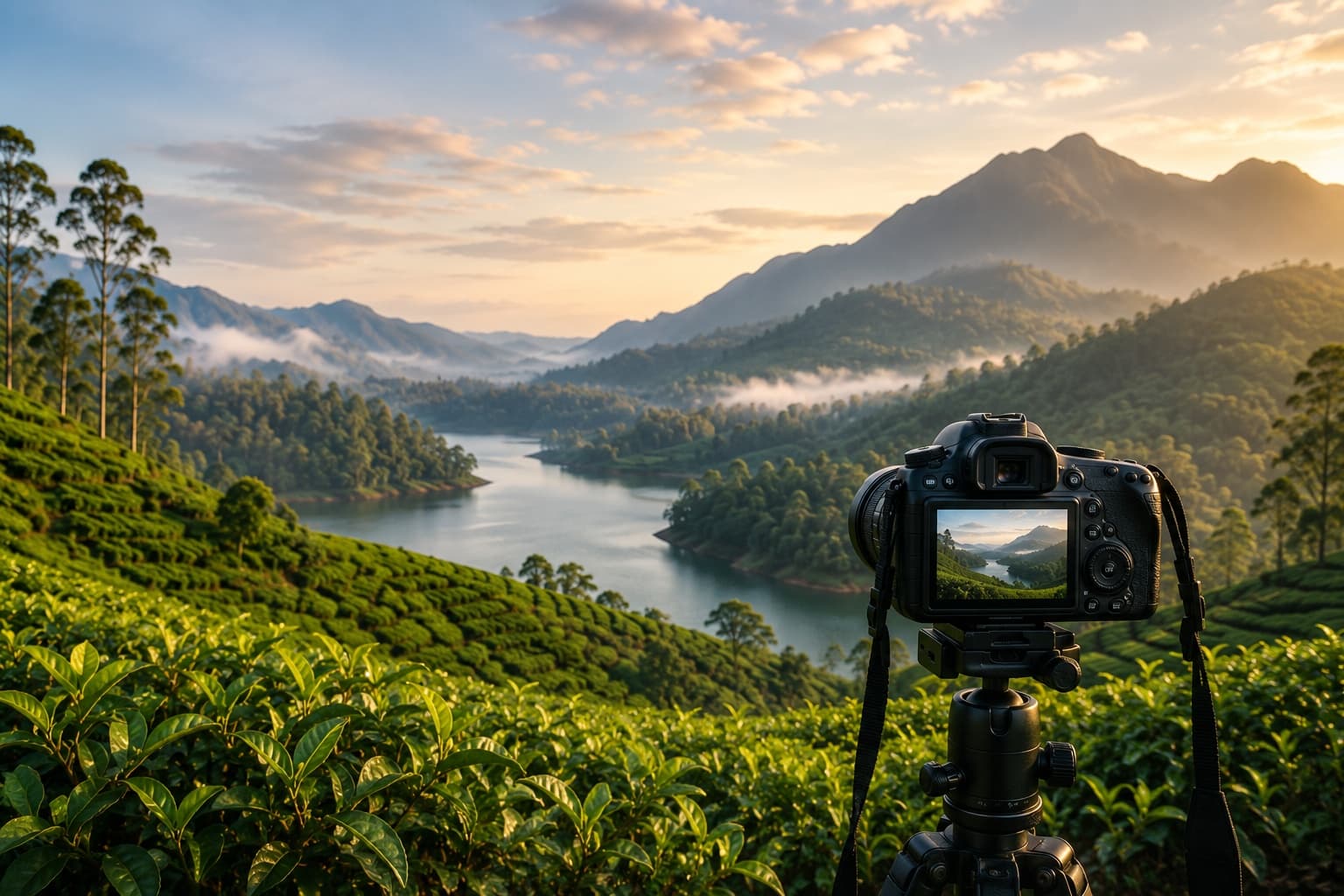
Munnar doesn't ask you to look for beautiful photographs the photographs find you. In the first rays of gold spilling across a ridge of tea bushes at dawn. In the silhouette of a Nilgiri tahr standing against a cliff at Eravikulam. In the white breath of morning mist rolling across a valley that was bright green just an hour before. If you're arriving in Munnar with a camera even just a phone you're stepping into one of India's most photogenic hill stations. This guide covers the best nature photography spots in Munnar, the times of day that transform each location, and practical gear tips to help you capture what this landscape is genuinely offering.
Why Munnar Is a Photographer's Dream Destination
At 1,600 metres above sea level, Munnar sits in the Western Ghats where weather and light behave on their own schedule and that unpredictability is exactly what makes it so rewarding to photograph. You can experience four distinct qualities of light in a single day: the amber warmth of sunrise, the sharp contrast of midday over ridgelines, the soft diffused glow of late afternoon through mist, and the moody blue of the hour after sunset.
The landscape is as varied as the light. Contoured tea gardens that seem hand-drawn from a distance. Dense forest canopy broken by silver waterfalls. High-altitude grasslands above the treeline. Endangered wildlife that goes about its morning without noticing you. And in the valley below, on any clear morning, a scene so layered in green and mist that you'll stop and shoot before you've even thought about it.
Best Nature Photography Spots in Munnar
1. Pothamedu Viewpoint: Munnar's Most Photographed Horizon
Five kilometres from Munnar town, Pothamedu Viewpoint looks out over an unbroken panorama of tea, coffee and cardamom plantations that seems to stretch beyond the hills. Arrive before 7 AM to catch the morning mist still sitting in the valleys. By mid-morning the air clears and the greens become more saturated ideal for wide-angle landscape work. The evening at Pothamedu is quieter than the morning, with fewer visitors and warm raking light washing the hillsides in amber. Visit our complete guide to Pothamedu Viewpointo for exact timings and practical tips before you go.
2. Anachal Tea Estates: Where the Rows Never End
Anachal, where Hotel White House Munnar is situated, sits inside one of the most active tea cultivation zones in the region. The tea bushes here are trimmed into precise contoured rows that create natural leading lines one of the most powerful compositional tools in landscape photography, and one that never tires in this terrain. Photograph estate workers during the morning harvest for scale and human story. Early morning, when leaves carry dew and the light is still low and directional, gives the best results. Our jeep safari guider covers the routes that take you deeper into this landscape before the roads open to regular traffic.
3. Eravikulam National Park: Wildlife and High-Altitude Meadows
Eravikulam is the only place in India where you can photograph the endangered Nilgiri tahr a mountain goat endemic to the Western Ghats at close range, without a professional-grade telephoto setup. The animals are habituated to visitors on the designated trail and often graze within a few metres of the path. Beyond wildlife, the park opens into Shola grassland above 2,000 metres. Early morning entry gives you the best light for wildlife and the fewest crowds. Eravikulam is a short drive from Anachal, making it a natural half-day excursion from Hotel White House Munnar check the nearby attractions page for directions and context.
4. Echo Point: Mist, Lake and Silence
Echo Point on the Munnar Kodaikanal highway holds a wide, still lake ringed by forested hills. On calm mornings the reflections are near-perfect. The location is at its most photogenic in the monsoon mist sits low over the water surface, and the surrounding hills turn a deep, saturated green that needs no editing. Arrive before 9 AM to get the quiet compositions this spot deserves before the tour buses arrive.
5. Mattupetty Lake: Mirror Images at Dawn
Mattupetty Dam creates one of the most reflective bodies of water in the Munnar area. The hills that ring the lake mirror themselves on still mornings, and the pastoral setting of the surrounding dairy farmland adds a storybook dimension to the location. This spot works across all seasons, though the monsoon months of June to August produce the most dramatic skies and the richest reflected colours.
6. Hotel White House Munnar: A Property Worth Photographing
Not every photographer thinks of their accommodation as a shooting location, but Hotel White House Munnar offers frames many guests don't anticipate. The views from the Valley View Room balconies at sunrise produce soft aerial perspectives of the Munnar hills that rival the best viewpoints in the region. The Forest View Rooms look directly into the canopy on misty mornings, the forest edge glows with a backlit diffusion that no studio setup could replicate. The swimming pool at golden hour is another scene that comes together without any arrangement: mist behind the hills, still water catching warm light, and the quiet of early evening doing all the work. Browse the hotel gallerya to see what guests have captured from across the property, and read our full list of ten instagrammable spots at Hotel White House Munnar for a room-by-room photography guide.
[IMAGE PLACEHOLDER: infographic-1-best-time-day-photography-munnar.png | Alt: Best time of day for nature photography in Munnar timeline from blue hour through sunrise golden hour to sunset]
Best Time of Day for Photography in Munnar
Blue Hour (5:00 AM — 5:45 AM)
The fifteen minutes before sunrise, when the sky is deep indigo and the landscape is silhouetted against fading darkness — this is the blue hour. It rewards those with a tripod. Viewpoints and open valleys take on an otherworldly quality in this window. Very few tourists are awake for it, which is half the reason it works so well photographically.
Golden Hour: Sunrise (5:45 AM — 7:30 AM)
The single most productive window for photography in Munnar. The combination of low-angle warm light, morning mist still hanging in the valleys, and nearly empty viewpoints makes this period irreplaceable. Set your alarm for 5:15 AM, reach your spot before the sun clears the ridge, and stay until the mist burns off typically around 7:30 to 8:00 AM. Both Pothamedu and the Anachal tea estates are within easy reach of Hotel White House Munnar at this hour, making an early start effortless.
Midday (11 AM — 2 PM)
The least ideal window for most outdoor photography in Munnar. Shadows are short and harsh, and the sky tends toward flat overcast. Use this time for interior shots, market photography in Munnar town, or planning your afternoon locations. A slow lunch at Ivory The Multi Cuisine Restaurant and a review of your morning shots is a more productive use of midday hours than forcing outdoor frames you'll later discard.
Golden Hour: Sunset (5:00 PM — 6:30 PM)
Munnar's evenings are softer than its mornings. The light is warmer, less contrasty, and more forgiving — ideal for portraits, tea garden texture work, and architectural photography. Pothamedu at sunset is notably quieter than at dawn, and the long shadows falling across the contoured tea rows in this light produce an entirely different set of photographs from the same location you visited that morning.
Best Season for Nature Photography in Munnar
October to February: Peak Clarity
Clear skies, low humidity and well-defined light make this the most consistently rewarding season for landscape photography. Eravikulam National Park is fully accessible and Nilgiri tahr are most visible in the early mornings. Wildlife photography conditions are at their best. Visitor footfall is also highest in this season, so arriving early at popular viewpoints is especially important.
June to September: Monsoon Drama
Counterintuitively, the monsoon is a season worth planning a photography trip around. Waterfalls are at their most dramatic. The hills carry a deep, saturated green that post-processing cannot improve on. The mist creates layered depth in valley shots that is simply not achievable in the dry season. Light is soft and diffuse flattering for both landscape and portrait work. Road conditions can be challenging and some viewpoints may be temporarily inaccessible. Our Munnar monsoon guidec covers what to expect and how to prepare for a wet season visit.
March to May: Pre-Monsoon Green
The tea gardens are particularly lush in spring, and the weather remains dry enough for comfortable outdoor work. You'll still get mist on mornings, and the wildflower coverage on the higher grasslands can be exceptional in March and April. A good season for those who want the visual richness of the monsoon without the weather unpredictability.
For a full month-by-month breakdown of Munnar's seasons, read our complete guide to the best time to visit Munnar.
[IMAGE PLACEHOLDER: infographic-2-gear-checklist-munnar-photography.png | Alt: Photography gear checklist for Munnar lenses, filters, tripod and weather protection essentials for hill station shooting]
Photography Gear Tips for Munnar
Lenses
Wide-angle (16–35mm equivalent): Munnar's landscapes are expansive. A wide-angle lets you capture the full sweep of a valley or tea garden panorama without needing to stitch frames. Essential for Pothamedu, Mattupetty, and the open Shola grasslands of Eravikulam.
Telephoto (100–400mm equivalent): Non-negotiable for Eravikulam wildlife. Even when Nilgiri tahr are within a few metres of the path, a telephoto gives you the background compression and subject separation that makes a genuine wildlife portrait rather than a holiday snapshot. It's also valuable for isolating tea bush rows and separating distant hillsides into distinct layered planes.
Filters
Circular Polariser (CPL): Cuts through haze and deepens colour saturation in the tea gardens. Especially effective at Mattupetty and Echo Point for eliminating surface glare on water reflections.
Graduated ND filter: Balances the exposure difference between bright skies and dark foregrounds during sunrise and sunset a common problem in Munnar's high-contrast lighting conditions without it.
Tripod
Essential for blue-hour photography, long-exposure waterfall shots during the monsoon, and any low-light landscape work. Even a lightweight carbon travel tripod makes a significant difference to dawn and dusk image quality, and the mist-heavy mornings of Munnar frequently call for slower shutter speeds even in reasonable daylight.
Weather Protection
Munnar's humidity is considerable, particularly during the monsoon and in the early morning when dew is heavy. Carry silica gel sachets inside your camera bag. Allow equipment to acclimatise gradually when moving from cool outdoor air into air-conditioned rooms condensation on glass elements is a genuine risk. A rain sleeve for your camera body and a bag rain cover extend your outdoor shooting time substantially in the wet season.
Shooting with a Smartphone
Munnar is genuinely forgiving for phone cameras, especially in soft morning light. Use Portrait Mode at the 2x setting for tea garden detail shots. Enable grid lines and apply the Rule of Thirds. Shoot in RAW if your phone supports it. The most important tip is universal: shoot early. Phone cameras perform at their best in diffuse, low-contrast light and Munnar mornings deliver exactly that.
Planning Your Photography Stay at Hotel White House Munnar
Hotel White House Munnar sits in Anachal, placing you within direct reach of every major photography location covered in this guide. Pothamedu Viewpoint is 5 km away. Eravikulam National Park is accessible within thirty minutes. Mattupetty and Echo Point lie on the same route. The hotel's facilities include travel assistance and jeep safari options that can take you into the tea estates at dawn before the roads open to regular traffic giving you access to angles that most day-trippers never see.
Room choice matters for photography guests. The Forest View Room faces the canopy edge and catches morning backlight through the trees. The Valley View Room opens onto the open valley on most mornings between October and February you'll have mist rolling in across the view from your own balcony. All room types, views and balcony configurations are detailed on the rooms page to help you choose the right base for your photography trip.
Every moment in Munnar is a potential frame. Reserve your stay at Hotel White House Munnar and plan your trip around the light.
Frequently Asked Questions
What is the best time of year for photography in Munnar?

October to February offers the clearest skies, cleanest light and best wildlife visibility, making it the most reliably rewarding season for landscape and wildlife photography. June to September (monsoon) is the best period for waterfall and mist photography, with deep saturated greens and dramatic skies. March to May offers lush tea gardens and dry, comfortable conditions. Most photographers planning a dedicated photography trip to Munnar choose October to February for consistent light and clear viewpoints.
What is the best time of day to photograph Munnar's tea gardens?
Sunrise, between 5:45 AM and 7:30 AM, is the best window. Low-angle light catches the dew on tea leaves and the morning mist creates natural depth in the valleys. The golden hour before sunset (5:00 PM to 6:30 PM) is the second-best window, the light is softer, warmer and more forgiving, with long shadows tracing the geometry of the tea rows. Hotel White House Munnar's location in Anachal places you within five minutes of the estate roads at either hour, making an early start or an evening shoot effortless.
Can I photograph Nilgiri tahr at Eravikulam National Park?
Yes. Eravikulam is one of the only places in India where you can photograph Nilgiri tahr in the wild at close range. The animals are habituated to visitors on the designated trail and are often visible within a few metres of the path, particularly in the mornings.
Do I need a professional camera for nature photography in Munnar?
No. Munnar's landscapes are genuinely rewarding for smartphone photographers, especially in soft morning and evening light. A DSLR or mirrorless camera with a telephoto lens gives you an advantage for wildlife photography at Eravikulam and for blue-hour work, but landscape and tea garden photography can be done effectively with any modern phone.
Are there photography restrictions in Munnar?
Commercial photography inside Eravikulam National Park requires prior permission. Personal photography on the visitor trail is permitted. Some private tea estate areas may restrict entry without prior arrangement the hotel's travel desk can assist with access. Drone photography requires DGCA approval and local clearance and is generally not permitted in protected areas or above tea estates without written authorisation. Always ask permission before photographing estate workers or individuals.
Which spots near Hotel White House Munnar are best for photography?
Pothamedu Viewpoint (5 km), the Anachal tea estate roads surrounding the property, and the hotel's own valley-facing balconies and pool area are all outstanding photography locations within easy reach. The hotel's jeep safari service can take you deeper into the tea estates for early-morning access.
What gear should I carry for monsoon photography in Munnar?
A rain sleeve for your camera body, a bag rain cover, silica gel sachets to manage humidity inside your bag, a lens cloth for quick wipe-downs, and a circular polariser to cut through haze. A tripod is also recommended for long-exposure waterfall shots and mist landscape frames in low light.
Can Hotel White House Munnar arrange early morning jeep access for photography trips?
Yes. The hotel offers travel assistance and jeep safari arrangements that can be scheduled for early morning access to the tea estates and surrounding forest areas. Contact the front desk or call +91 79077 81644 to arrange your photography itinerary in advance.
Is Munnar suitable for astrophotography?
The Anachal area, where Hotel White House Munnar is situated, has lower light pollution than Munnar town and can offer reasonable conditions for star photography on clear nights between October and February. A tripod and a fast wide-angle lens (f/2.8 or faster) are essential. Cloud cover and mist can be obstacles on some nights.
What makes Pothamedu Viewpoint a great photography spot?
Pothamedu Viewpoint looks out over an unbroken panorama of tea, coffee and cardamom plantations in the valley below. The combination of wide sightlines, morning mist and the geometry of the plantation rows makes it one of the most consistently rewarding photography locations in Kerala. It is 5 km from Munnar town and within easy reach of Hotel White House Munnar.