Authentic Kerala Cuisine You Must Try During Your Munnar Stay
 Services
Kerala cuisine munnar visitors encounter is a hill version of a coastal repertoire, and the differences are worth understanding before you order. The fish that dominates the backwaters is a long way from here; what the hills add instead is spice, grown within an hour of the property, and vegetables that behave differently at 1,600 metres than they do at sea level. Most hotels in Munnar Kerala serve some version of these dishes, but the quality varies widely, so it helps to know what a good one looks like. This guide covers the dishes genuinely worth ordering during a three or four night stay, what to expect from each, and how to get a proper sadya arranged rather than settling for a shortened version of it.
Key Takeaways
- Coconut, curry leaf, tamarind and black pepper are the backbone of nearly everything.
- The vegetarian repertoire here is unusually deep and worth taking seriously.
- A sadya is a lunch dish and needs notice; it does not appear on demand at dinner.
- Spice levels are adjustable, so ask rather than avoiding a dish entirely.
Breakfast Is Where to Start
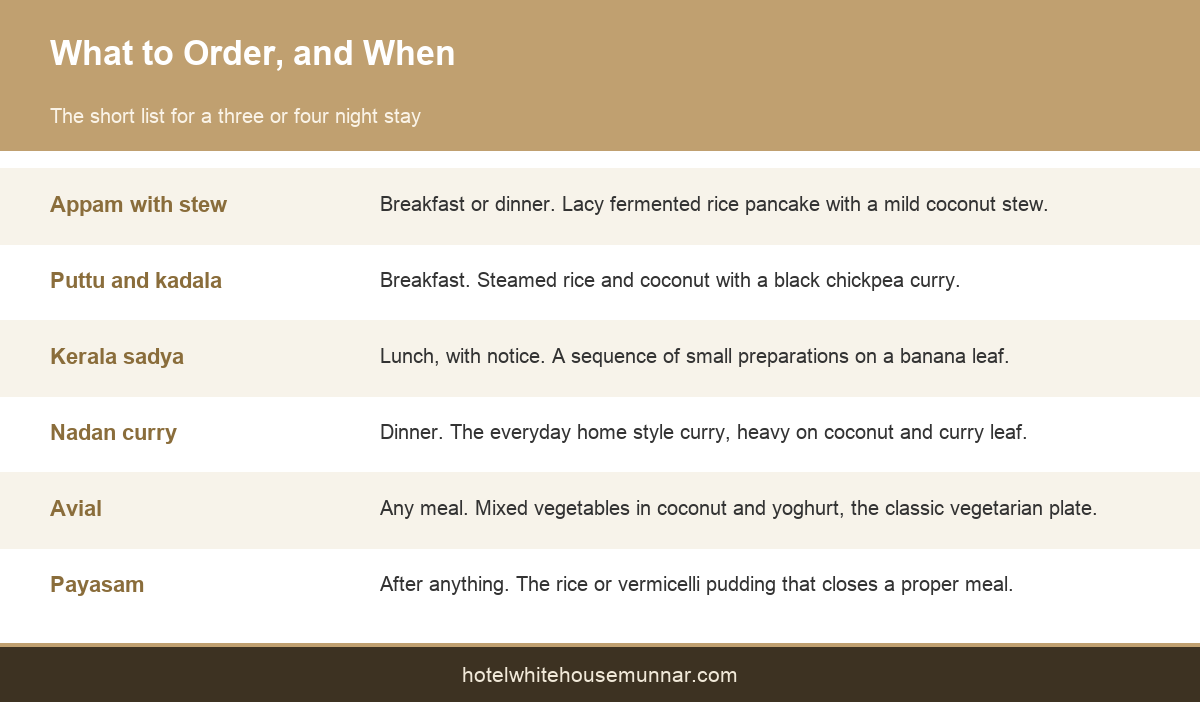
The regional breakfast is the easiest entry point and the one most guests enjoy immediately. Appam, a lacy fermented rice pancake with a soft centre, served with a mild coconut stew, is the dish to order on the first morning.
Puttu, steamed cylinders of rice flour and coconut served with a black chickpea curry, is the other staple. It is heavier and better suited to a morning where you are going walking.
Idiyappam, string hoppers, sit between the two and take almost any accompaniment. All three are vegetarian by default, which surprises visitors expecting to have to ask. Breakfast is usually included with hotel accommodation in Munnar, so the first morning is the cheapest time to experiment.
Mornings here are the best part of the day for eating outside, which our morning meal write-up covers.
The Sadya, and How to Get One
A sadya is the set piece of Kerala food: a sequence of small vegetarian preparations served on a banana leaf in a fixed order, eaten with rice, and finished with payasam. It is a festival meal rather than a menu item.
That means notice, even at the best resorts in Munnar. It is prepared for a table rather than a plate, and asking on the evening will get you a shortened version at best. A day's warning gets you the real thing.
It is traditionally a lunch, which fits a rest day rather than a sightseeing one. Slot it into the flexible afternoon in our long-weekend plan.
During the harvest festival it is the centrepiece of the whole celebration, which our festival write-up covers, alongside Kerala Tourism's background on the festival.
The Everyday Dishes
Nadan curry, the home style everyday preparation, is where the region actually lives. Heavy on coconut and curry leaf, tempered with mustard seed, and built around whatever the kitchen has that is good.
Avial is the vegetarian dish to order if you order only one: mixed vegetables in coconut and yoghurt, cooked so the pieces hold their shape. It is a main course rather than a side, which visitors frequently get wrong.
Thoran, a dry coconut and vegetable preparation, and olan, a gentle ash gourd and coconut milk dish, round out a proper vegetarian spread. Our meat-free options note covers what else is available without notice.
For meat eaters, the Kerala chicken and mutton preparations here lean darker and more peppery than their northern equivalents, and are worth ordering at least once. Kitchens at 5 star resorts in Munnar Kerala often tone these down for visitors by default, so ask for the home style version if you want it as it is cooked locally.
What the Hills Add
The single biggest difference between coastal and hill Kerala cooking is the spice, and here it is not imported. Cardamom, pepper and clove grow within an hour of the property, which our plantation visit guide sets out in detail.
Freshness shows most in the pepper. Ground close to where it grew, it has a heat that fades quickly and a fruitiness that does not survive a supply chain. It is the reason the same dish tastes different here, and why a 5 star property in Munnar that grinds its own spice serves a noticeably better curry than one relying on ready-made masala.
Tea is the other hill ingredient, and it belongs in the meal rather than after it. A cup made from leaf grown on the slopes you have been walking is a genuinely different drink, which our estate visit guide explains.
Vegetables also behave differently at elevation, growing more slowly and tasting stronger, as our kitchen sourcing write-up covers.
Ordering Well, and Managing Spice
Spice levels are adjustable in almost every dish, so the right move is to ask rather than to avoid the dish. Kitchens here are entirely used to the request and it does not offend anyone.
Order fewer dishes than you would in a North Indian restaurant. Portions come with rice and the accompaniments multiply quickly; three mains for four people is usually enough.
Take at least one meal slowly. The sequencing of a Kerala meal matters, and rushing a sadya in twenty minutes because there is a viewpoint to reach defeats the point of ordering it.
Finish with payasam at least once. It is sweeter than most visitors expect and it closes the meal in the way the region intends.
Conclusion
You are in one of the most distinctive food regions in the country, and whether you stay at one of the Munnar Kerala 5 star hotels or somewhere smaller, it takes surprisingly little effort to eat well here. Order appam on the first morning, avial at some point, a nadan curry for dinner and a sadya at lunch on the day you are not rushing anywhere. Ask about spice rather than avoiding dishes, and buy pepper before you leave. Our wider dining guide sets this in the context of a whole stay, and you can tell us about any requirements when you book.
Frequently Asked Questions
What is a sadya?

What should I order for breakfast?
Is Kerala food very spicy?
Is there much for vegetarians?
What makes hill cooking different from the coast?
How many dishes should we order?
What should I try at the end of a meal?
Can I buy spices to take home?