Multi-Cuisine Dining at Hotel White House Munnar: The 101 Tastes Experience
 General
The phrase most often attached to this kitchen is first time in Munnar with 101 delicious tastes, which sounds like marketing until you spend four nights here and understand what it is solving. A multi cuisine restaurant munnar guests actually rely on is not one with a long menu; it is one that can still surprise you on the third consecutive evening, when the town has closed and going out is not an appealing option. This piece sets out what the kitchen covers, how the menu shifts with the season and with what is growing nearby, and what is genuinely worth ordering on each night of a typical stay.
Key Takeaways
- Four cuisines in one service: South Indian, North Indian, Chinese and Continental.
- The regional section is the deepest, and the reason to eat here rather than anywhere.
- Menus flex with what is available locally, which changes noticeably by season.
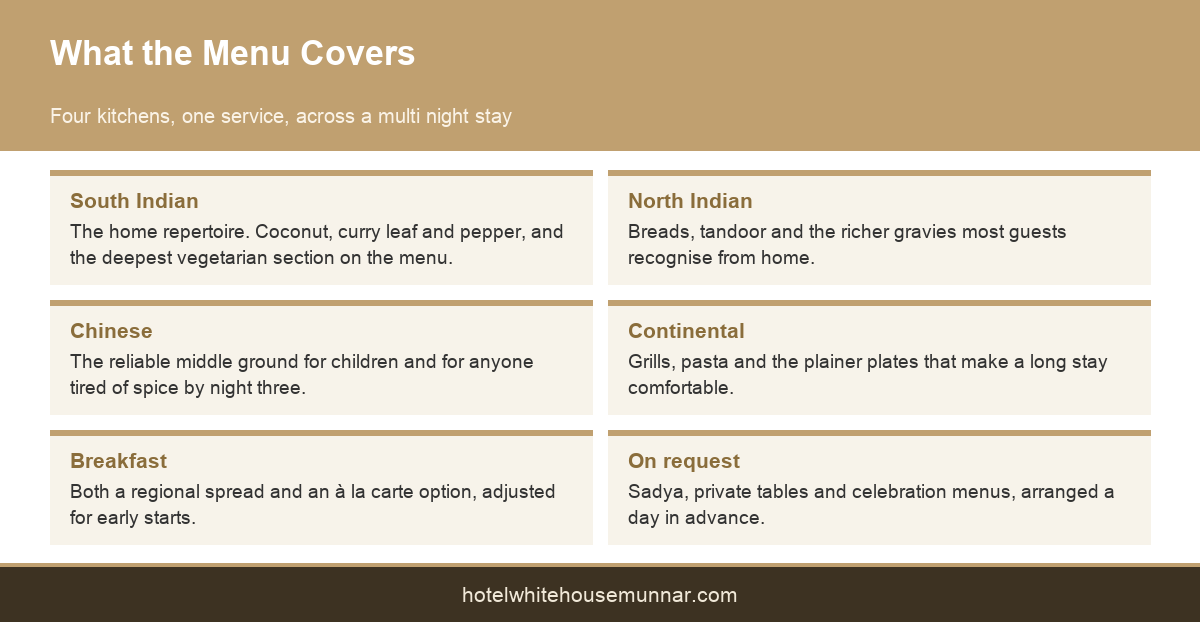
- Sadya, private tables and celebration menus need a day's notice, not an evening's.
The Problem a Broad Menu Solves
Almost every guest here eats in on most nights, for reasons covered in our wider dining guide: the town closes early and the roads back are dark. That turns menu range from a nicety into the thing that decides whether night three is a pleasure or a chore.
It is also a family problem. A table of eight with three generations on it will not agree on a cuisine, and the alternative to breadth is one group eating something they did not want.
The 101 tastes framing is really a promise about that: that the kitchen can serve a grandmother, a fussy seven year old and a couple who want something they have never had, at the same sitting.
For guests staying five nights or longer, which our extended itinerary covers, this stops being a convenience and becomes the main argument for the property.
The South Indian Section
This is the deepest part of the menu and the one guests under order from, usually because they assume they know it already. The repertoire here is coastal and hill Kerala rather than generic South Indian, and the difference is real.
Coconut in three forms, curry leaf, tamarind and black pepper are the backbone. The vegetarian dishes are vegetarian by design rather than by removal, which is why they hold up as a main course rather than a side.
Our regional food guide goes through the individual dishes worth trying, and Kerala Tourism's own food overview gives the wider context.
Pepper, cardamom and clove used here grow within an hour of the property, which our plantation visit guide covers. Guests who have done that tour tend to order differently afterwards.
North Indian, Chinese and Continental
The North Indian section is what most guests default to on the first night, and it does the job: breads, tandoor items and the richer gravies that travel well and are familiar to almost everyone at the table.
Chinese occupies a specific and useful role. It is the section children choose, and the one adults reach for when three days of spice has done its work. It is not the reason to come here and it is the reason night three is fine.
Continental covers the plainer plates: grills, pasta, and simple preparations that suit anyone recovering from a long drive or an early start. On the morning after a pre dawn trip, described in our first-timer write-up, this is what most people want.
None of these sections pretends to be the best example of its cuisine in India. They are there so that a four night stay does not narrow down to one thing.
How the Season Changes the Plate
A kitchen at this elevation has a supply chain that shifts through the year. Some produce comes up from the plains, some grows within a few kilometres, and the local share tastes noticeably better when it is in season.
That is most obvious in the vegetable dishes, which change in character between the monsoon and the dry months. Our kitchen sourcing write-up covers where things actually come from.
During the wet months, covered in our note on the wet season, more guests eat in more often, and the menu leans warmer and heavier in response. In the dry winter it lightens again.
The practical advice is to ask what is good that week rather than ordering from the menu by habit. The kitchen will steer you well, and it is the closest thing here to a specials board.
What to Order, Night by Night
Night one, after the drive: something familiar and not too heavy. Most guests take a North Indian main and regret nothing.
Night two: the regional menu, properly. This is the meal to spend attention on, and the one you cannot replicate at home. If there are enough of you, ask about a sadya, which our regional food guide describes.
Night three: whatever is furthest from the last two. This is the night the breadth of the kitchen earns its place.
Night four, if you are marking anything: a private table. Our private table write-up and celebration write-up cover how those are arranged, and both need a day's notice rather than an evening's.
Conclusion
A broad menu is not a boast here, it is a practical answer to the fact that you will eat most of your meals in one place. Use it properly: order the regional food on the night you have energy for it, use the other sections to keep the week varied, and tell the kitchen in advance about anything that needs planning. Our dining page carries the current menu, and if you are travelling with a particular requirement or occasion, mention it when you confirm your dates.
Frequently Asked Questions
What cuisines does the kitchen cover?

Is there enough choice for a four night stay?
What should I order on the first night?
Can we have a sadya?
Is the food very spicy?
Do the dishes change through the year?
Is there in room dining?
Can you handle a large group at one sitting?